Homeowner Webzine
Benefits of a Home Elevator
Elevator Design
Home Elevator Safety
Home Elevator Options
Door Options
Drive Systems
Elevator Glossary
Elevator FAQ
Elevator Specifications

Benefits of a Home Elevator

Residential Elevators Offer Many Advantages to Homeowners

Increased Mobility

If you or anyone in your family has mobility concerns, you will appreciate the freedom a home elevator provides. Visiting parents or relatives will also experience a greater degree of freedom around your home. Anticipating future mobility limitations can also allow you to stay active and retire in your family home.

Convenience

Moving around groceries, laundry, furniture, children and luggage becomes much easier with a residential elevator.

Increased Home Value

If you have an eye towards your home as a monetary asset, adding a residential elevator can pay off in the long run. Residential elevators are becoming mainstream home products and a residential elevator will be beneficial to your long term home value.

Stylish Home Showpiece

Add a unique feature that can accentuate your home. Choose materials and fixtures for your home elevator to create a visually stunning showpiece that can be enjoyed every day in the comfort of your home.

New Home Savings

Rolling the Cost of an Elevator into a Home Mortgage
When building a new home the cost of the residential elevator can be incorporated into your mortgage to allow for one monthly payment.

Reduced Construction Costs
Elevator shaft construction costs are greatly reduced when incorporated into new home construction.

Elevator Design

Unveil a captivating addition to your home

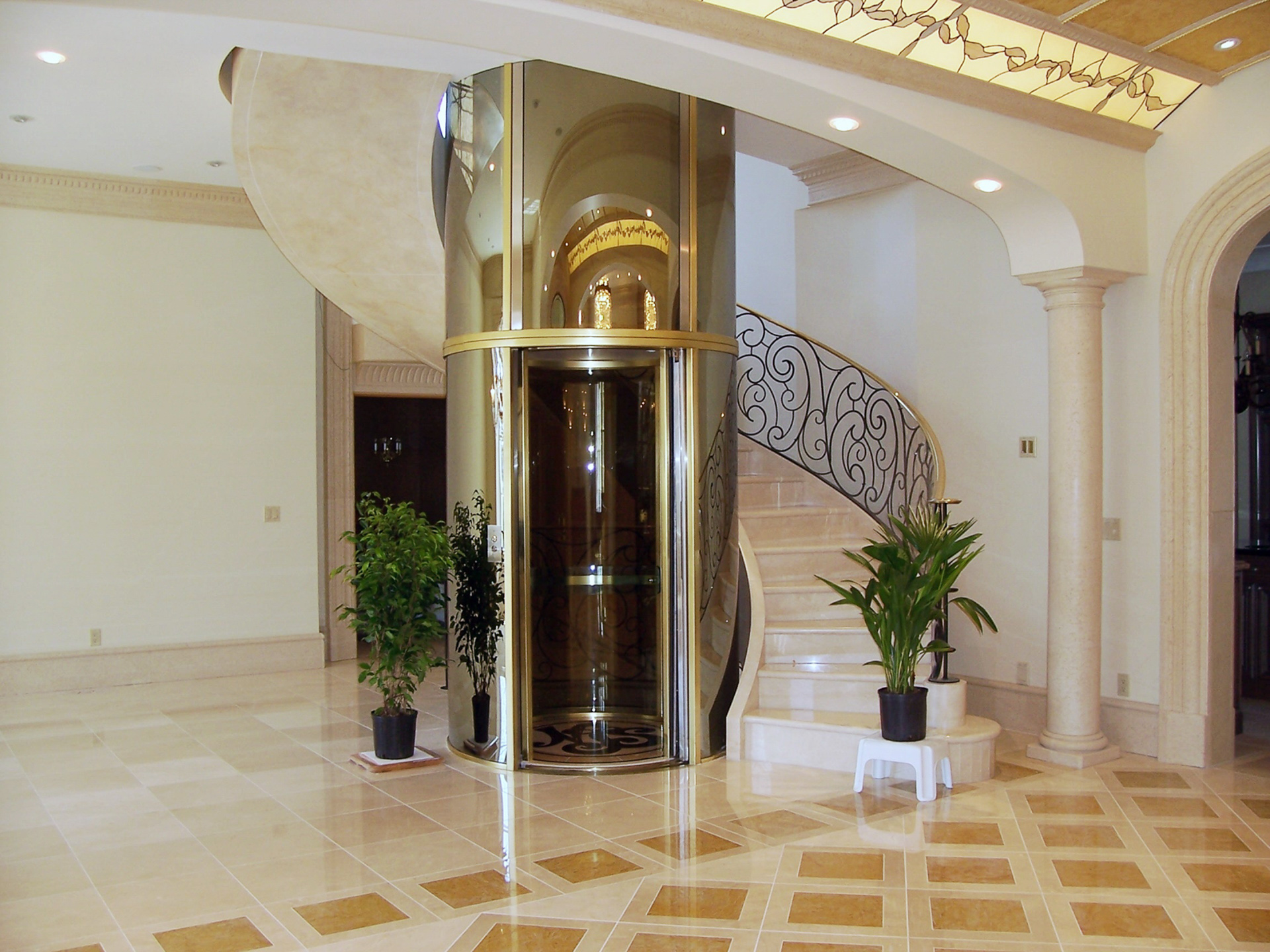
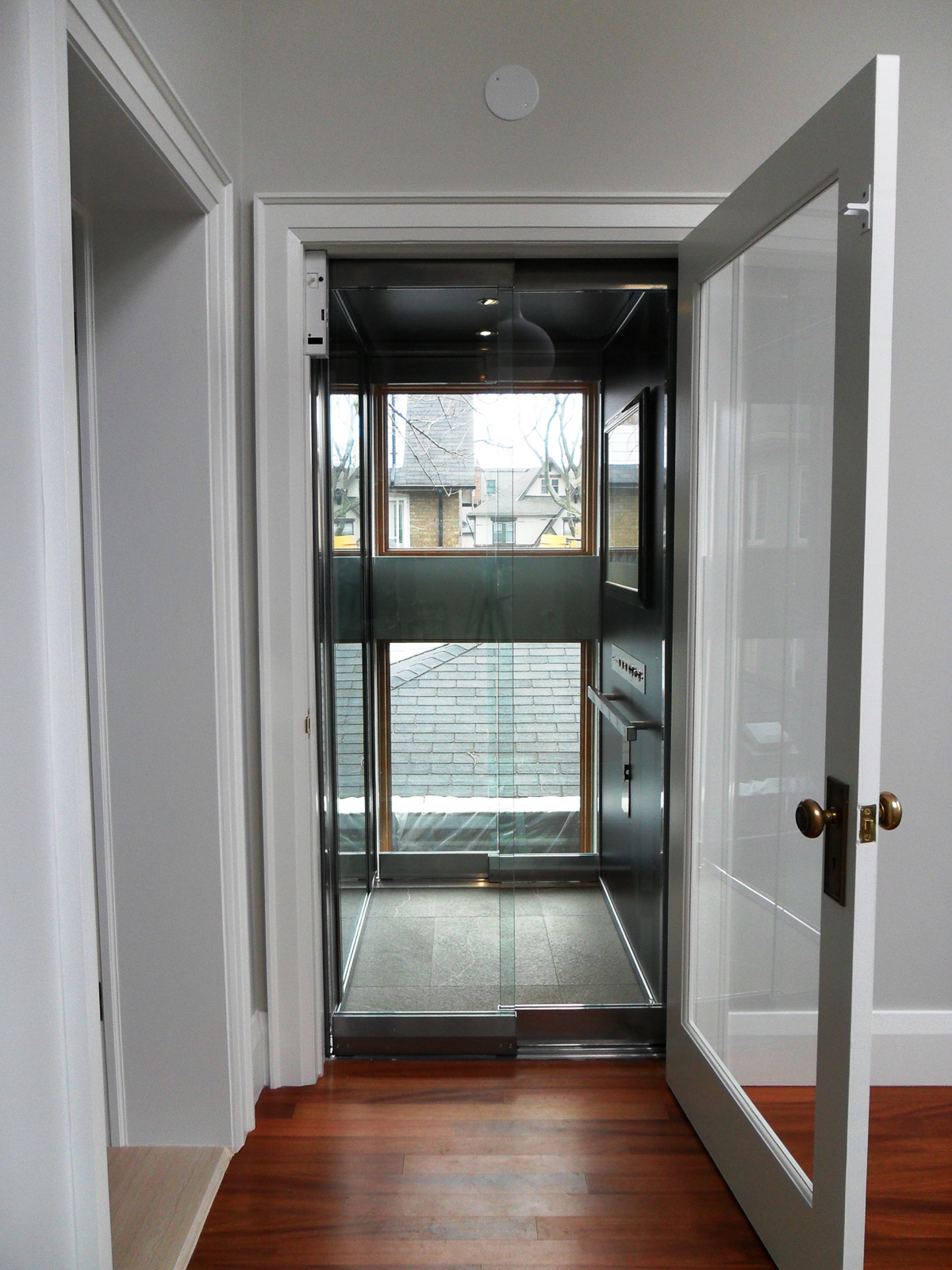
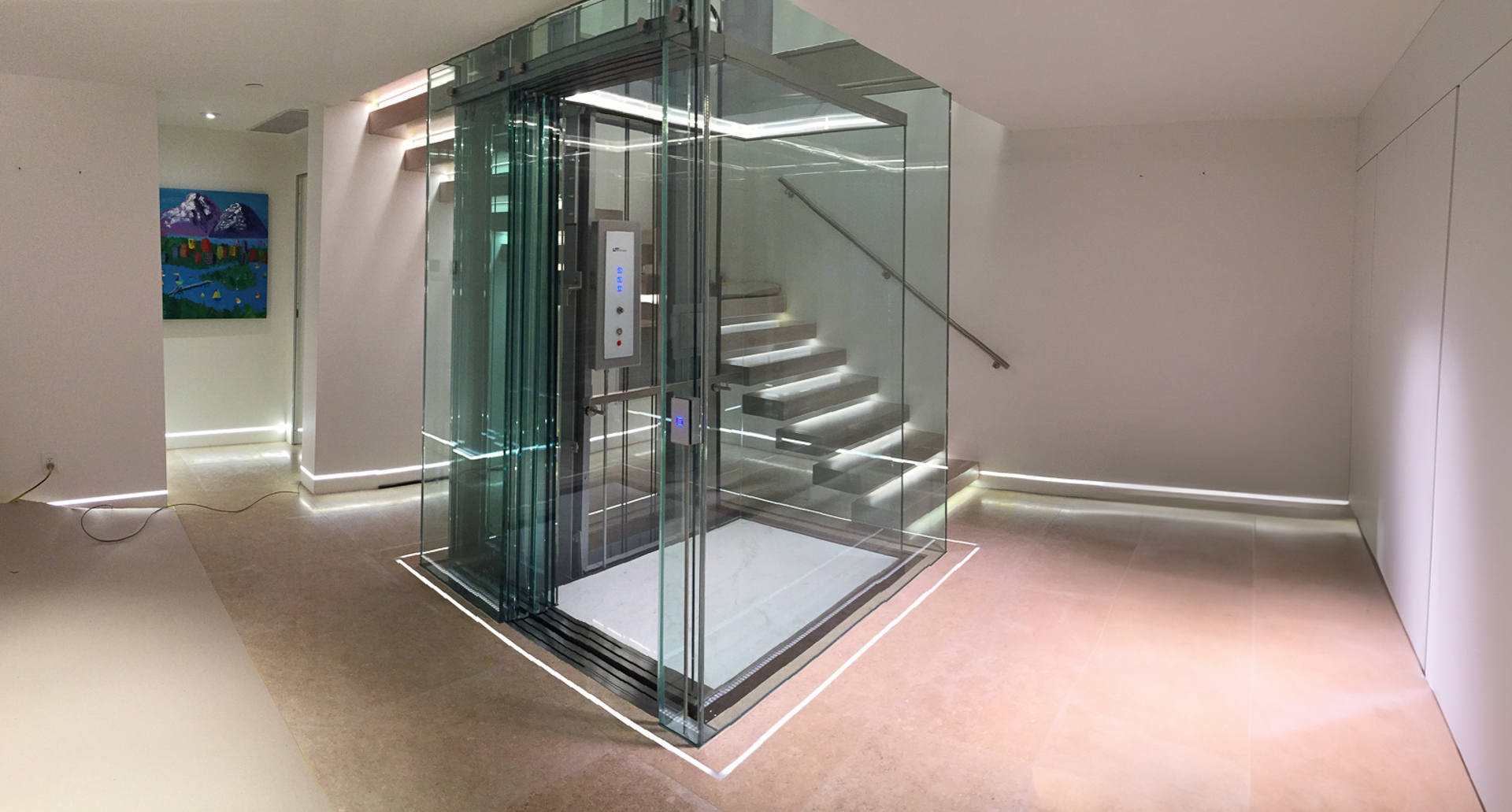
Our luxury elevators are designed individually and are tailored to match your vision. A residential elevator can be finished with a variety of materials, lighting design, and fixture styles.

UT Elevator specializes in glass and cylindrical elevators

Whether it is for accessibility, a home upgrade option, or a showpiece for your home, a UT elevator always incorporates both form and function. With our decades of experience hand-crafting elevators and our commitment to visually stunning creations, you will enjoy your luxury elevator for years to come.

Whether it is for accessibility, a home upgrade option, or a showpiece for your home, a UT elevator always incorporates both form and function. With our decades of experience hand-crafting elevators and our commitment to visually stunning creations, you will enjoy your luxury elevator for years to come.

Home Elevator Safety

The residential elevator industry is regulated in North America by a common set of codes

Residential elevators are becoming a standard feature found in any home. Home elevators are technically advanced machines and come equipped with extensive safety and backup systems.

We have been proudly manufacturing and distributing our products from our local facility for customers all across North America since 1983. There is a comprehensive set of codes that regulate residential elevators in North America. They are defined through a joint effort between the Canadian Standards Association (CSA) and the American Society of Mechanical Engineers (ASME). This set of rules is referred to as Safety Code for Elevators and Escalators - Private Residence Elevators (ASME 17.1 - 2007/CSA B44 - 07, Section 5.3).

Our engineers sit on the CSA B44 technical committee that governs these codes. We strongly believe in and are actively committed to the overall safety of the private residence elevator industry.

Local jurisdictions adopt different versions of the the codes mentioned above and here at UT Elevator we work with you to navigate them.

Home Elevator Options

After you decide on the home elevator best suited for you, there are various options to choose from to finalize your product

The flexibility to specify stops, landings, and car openings independently allows for a unique level of customization.
Number of Stops

The number of stops the elevator car makes. This corresponds to the number of different elevations, usually floors, throughout the house that have elevator access.

Number of Landings

The number of entries to the elevator from the building. This is usually the number of stops but it is possible for a floor to have multiple entries or for some floors to not have elevator access.

Car Openings

The number of openings in the elevator car. Each landing will match to an opening in the car when the elevator stops on the landing floor.

The flexibility to specify stops, landings, and car openings independently allows for a unique level of customization.
Operation
Automatic

User presses button once and elevator cab will automatically progress to designated floor.

Manual

User applies constant pressure to push buttons in order to move the elevator up or down. This configuration requires constant pressure button operation avoiding the necessity of a car door system. The user must keep the button pressed until arriving at the designated floor.

Door Options

Doors are where the elevator and the building meet

Car door options
Sliding doors

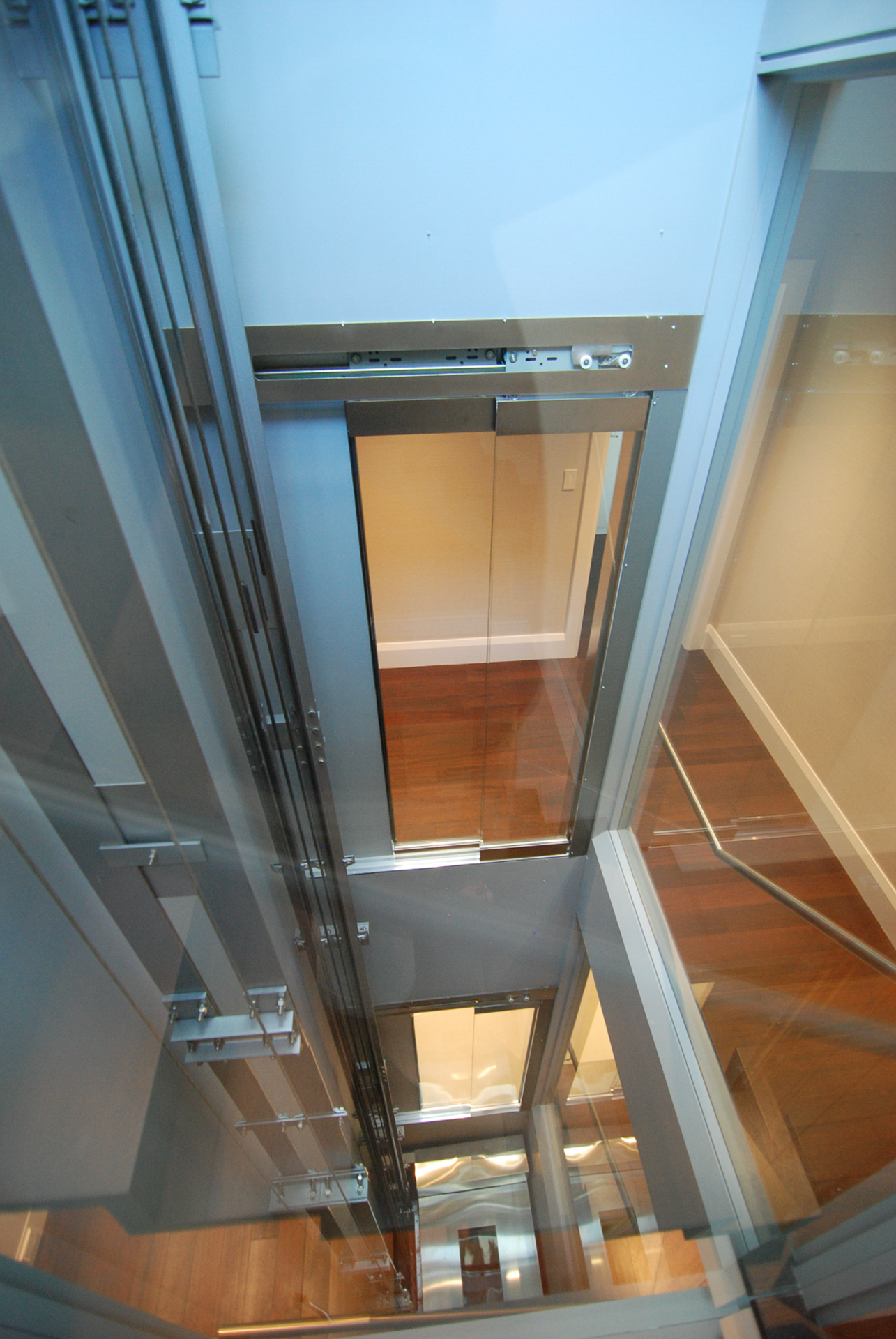
One or more panels that slide open. The hoistway size must accommodate a pocket for the door to slide into.

Gates

These doors collapse to open, the most common of which is an accordion gate. An excellent choice when there is not enough space to accommodate space for a sliding door.

None

There are no doors for car openings. This option is only possible with manual operation.

Landing door options
Swing doors

A door that swings open on hinges away from the elevator. These are normally provided by the home builder though there are options we provide for custom integration including opening automatically.

Sliding doors

One or more panels that slide open. The landing doors are provided with the elevator and must interact with the moving car. There is extensive coordination with the home builder and the landing must accommodate a pocket for the door to slide into.

Door operation

Any car or landing door can be made to automatically open through the use of a door operator. When the door operator is on the elevator car, it is possible for the the door operator to open both the car and the landing doors simultaneously. The location of the door operator can be hidden / visible.

Drive Systems

At the heart of a UT residential elevator is its drive system

We take pride in offering multiple state of the art commercial grade drive systems which have been customized for residential applications.

We take pride in offering two state of the art commercial grade drive systems which have been customized for residential applications.

MRL Gearless Traction

Elevator is completely housed in the shaft with no external requirements for a separate machine room. Compact state-of-the-art traction machine provides smooth ride with low decibel output.

Hydraulic

Elevator uses a hydraulic oil system for a smooth ride. A separate location outside of the shaft is required to house compact hydraulic drive system.

Elevator Glossary

Learn the terminology of home elevators

Building Structural
Hoistway

Also known as the shaft. The space designated for the support and travel of an elevator. It is characterized by three main dimensions: Overhead Clearance, Pit, and Travel.

Overhead Clearance

Distance measurement from top-most floor landing to top of hoistway (normally characterized by building rafters over hoistway).

Pit

Section of Hoistway below the bottom-most floor landing. Pit-depth is distance measurement from bottom-most floor landing to poured concrete pad at bottom of hoistway. The Pit is required to make room for the sling assembly when the car is sitting at the bottom-most floor.

Travel

Distance measurement from bottom-most floor landing to top-most floor landing.

Car
Cab/Car

Enclosure that passengers ride in. We offer standard, signature, and executive cab designs as well as custom made designs to suit your needs.

Car Station

Operating panel in the car that contains elevator buttons, and other features such as key switches.

Control Systems
Controller

Electrical control circuitry for elevator self-contained in an electrical controller box that is located externally to hoistway in both MRL and Hydraulic elevators. In Hydraulic, it is normally attached to the pump unit.

Control Valve Unit

Hydraulic Valve control unit used to control motion in Hydraulic Elevators. Through a series of valves, hydraulic fluid flow is controlled to produce smooth acceleration and deceleration.

VVVF

Variable Voltage Variable Frequency control used in MRL Elevators. By using VVVF to actively adjust the frequency and voltage amplitude of the supply mains going to the AC machine, the torque-speed characteristic can be precisely controlled. This produces smooth acceleration and deceleration.

Door Systems
Car Door

The door attached to the elevator car which directly accesses the cab interior. The car door moves along with the elevator.

Car Gate

Alternative to car door in the form of an accordion gate or bi-folding gate.

Door Interlock

Electromechanical door lock assembly located at each hall door. The lock is wired to the central elevator controller that monitors the door state as opened or closed. This ensures the elevator will only run if all doors are closed, and that the door cannot open unless the elevator is stopped at that floor.

Hall Door

The stationary door attached to the hoistway which accesses the car door when the elevator arrives at a floor level. It remains locked when the car is not at floor level.

Sliding Door System

Automated elevator door system coupling a sliding metal car door to a sliding metal hoistway door so that they both open and close together.

Drive Systems
Hydraulic Jack

Assembly consisting of a cylinder and sealed piston rod. Fluid pressure within the cylinder moves the piston rod moves upward or downward driving the elevator.

MRL

Machine Room-less drive system for complete in-shaft elevators. It consists of a permanent magnet AC synchronous machine and counterweight assembly.

Pump Unit

Metal tank enclosure housing hydraulic oil, submersible pump and motor used to run a hydraulic elevator.

Elevator Structural
Guide Shoes

C-shaped attachments on the sling that fit snugly over the rails to guide the sling (and car) up and down. They have rubber padding to reduce friction and noise between stationary rail and moving sling.

Platform

Structural base of car that sits on top of the sling channels.

Rails

T-shaped steel tracks that run the entire length of the hoistway for which the elevator runs. They are plumb (aligned perfectly vertical) and act as a guide for the car to move upwards and downwards.

Rail Brackets

Welded Structural Steel Brackets that tie the rails to the load bearing wall of the hoistway.

Sling

The supporting frame for which the car sits on. It is designed to structurally take the car static and occupancy loads and moves up and down along the rails.

Floor Features
Call buttons

Buttons exterior to the shaft which call the elevator to the current floor.

Hall Station

The operating panel housing elevator call buttons and user interface components such as indicator lights and arrows.

Hall Lantern Unit

Position indicator of the most current car position. It is digitally displayed.

Landing

Refers to floor stop. The terminal landings refer to the top-most and bottom-most floors. There is extra safety features to ensure the elevator does not go beyond terminal landings.

Operation
Automatic Operation

Hall station and Car station buttons only need be pressed momentarily to place a call with the elevator. The Car station has one marked floor button per landing served and the Hall station has one button to call the elevator to that floor.

Constant Pressure Operation

Car station and hall station buttons must be constantly pressed to operate the elevator. Once elevator reaches landing levelling zone, visual indicator notifies passenger that it is ok to release button pressure. The automatic levelling function will then ensure the car is perfectly level with the floor landing.

Levelling Zone

Small vertical distance about each landing that is marked by proximity or limit switches in the hoistway. When the car passes within this zone, a cam actuates these switches signalling that car is in levelling zone. Used in conjunction with elevator’s Auto-Levelling feature.

Safety Codes
ASME 17.1

American Society of Mechanical Engineers Safety Code for Elevators. Section 5.3 outlines Private Residential Elevators.

CSA B44

Canadian Standards Association Safety Code for Elevators

Safety Components
Auto-Levelling

Elevators automated ability to level itself as long as it is within the levelling zone. This only applies to Constant Pressure operation where operator may release button pressure at some point within levelling zone. Automatic operation is already calibrated to stop at each floor landing precisely. It uses a control system to ensure car stops safely at floor level.

Battery Backup

Battery backup converts DC to AC and supplies machine with enough juice to run elevator and elevator lights in case of power outage.

Manual Lowering Valve

A hydraulic elevator safety. A valve located on the control valve unit that can be manually opened to allow fluid to flow back into the pump unit lowering the car to the desired level. In case of power outage, this can be used to safely lower the elevator to a floor level.

Speed Governor

An MRL Elevator safety device. Governor consists of pulleys that spin freely with motion of elevator. If overspeed occurs, centrifugal force activates a sensor in the governor that cuts electrical power to the machine. In the case of down overspeed, there is an added mechanical safety. The governor wheel will catch onto a mechanical stop stopping it from spinning. This stop will cause a brake linkage to wedge onto the rails halting the elevators motion.

Terminal Limit Switches

Cuts power to machine and stops elevator if motion over-runs normal floor stop at terminal landings
Request term addition

Elevator FAQ

Common questions asked by our customers about home elevators

Installation FAQs

Drawings must be approved, the hoistway must be fully constructed including all structural elements, electrical power must be supplied to the controller location, and any required permits must be obtained.

A standard installation takes one week given the prerequisites of hoistway being fully constructed and electrical power supplied are met. A standard installation refers to one that is not a custom-designed job.

This question refers to remodelling jobs where the occupant is living in the house as the installation is taking place. The house is completely liveable while installation is happening. We will work around your schedule to ensure we are not an inconvenience while we install your elevator. The maximum inconvenience will be occasional construction-level noises as the structural portion of the elevator is assembled.
Post-Installation FAQs

Residential elevators are extremely safe. ASME 17.1 section 5.3 is the safety code set as the American National Standard pertaining to Private Residential Elevators. Our engineers and technicians at UT Elevator design, manufacture, and install the elevator in full compliance with this code. Our senior member sits on the CSA – Canadian Standards Association Committee and our company philosophy is dedicated to safety and excellence in the elevating field.

Microprocessor fault detection and safety homing, Manual Lowering Valve (Hydraulic Elevator), Manual electric break release (MRL Traction Elevator), Overspeed Governor (MRL Traction Elevator), Rail gripping mechanical safeties, Terminal Limit Switches, Automatic Levelling, Pit Safety Switch (Optional), Car Buffer (Optional), Battery Backup (Uninterruptable Power Supply), and a Telephone located in car with regular phone access.

UT Elevator will refer you to qualified and authorized Elevator Maintenance companies that specialize in Residential Elevators. Generally there are 2-4 visits per year as part of preventative maintenance to complete standard system checks. Typical checks that take place in a maintenance session are: Checking door operation, Checking Car levelling, Lubricating parts and rails, and Cleaning pit of any collected debris or obstructions.

If equipped with a battery backup system, the elevator will move uninterrupted to a pre-designated safety floor for exiting and the car will not leave that floor until main power is restored. If not equipped with a battery backup system, the elevator can be manually lowered to the desired floor using a manual relief valve (for Hydraulic elevators) or a manual brake release (for MRL Traction elevators). All door interlocks are equipped with a manual override for easy exiting in case of power failure.

Elevator operation is extremely quiet and is barely audible outside the hoistway. In the MRL unit, the loudest sound is the whirring of the hoisting machine as it turns. In a hydraulic elevator, there is slightly more noise as the machine is located in the pump unit which is external to the hoistway. This unit is normally installed in the garage or furnace room and is less obstructive than a washer or dryer.

No. The door interlocks that are installed and tested prevent hall (floor) doors from opening unless the elevator car is stopped at that floor.

Elevator Specifications

Download basic specifications for your architect, contractor or homebuilder to reference

Once you have chosen your options, the configuration of your elevator will be based off of the type of operation (manual or automatic) and the type of doors being used. If you are building a custom elevator, specifications will be developed as the project progresses. Three basic configurations are available below.

S - Automatic Operation with Sliding Doors

This configuration includes automatic button operation and commercial style sliding doors with finish chosen by the customer.

A - Automatic Operation with Accordion Gate

This configuration includes automatic button operation. It couples a collapsible accordion gate on the car with standard swing doors at each hoistway entrance.

L - Manual Operation with no car door requirement

This configuration requires constant pressure button operation avoiding the necessity of a car door system. The user must keep the button pressed until arriving at the designated floor.